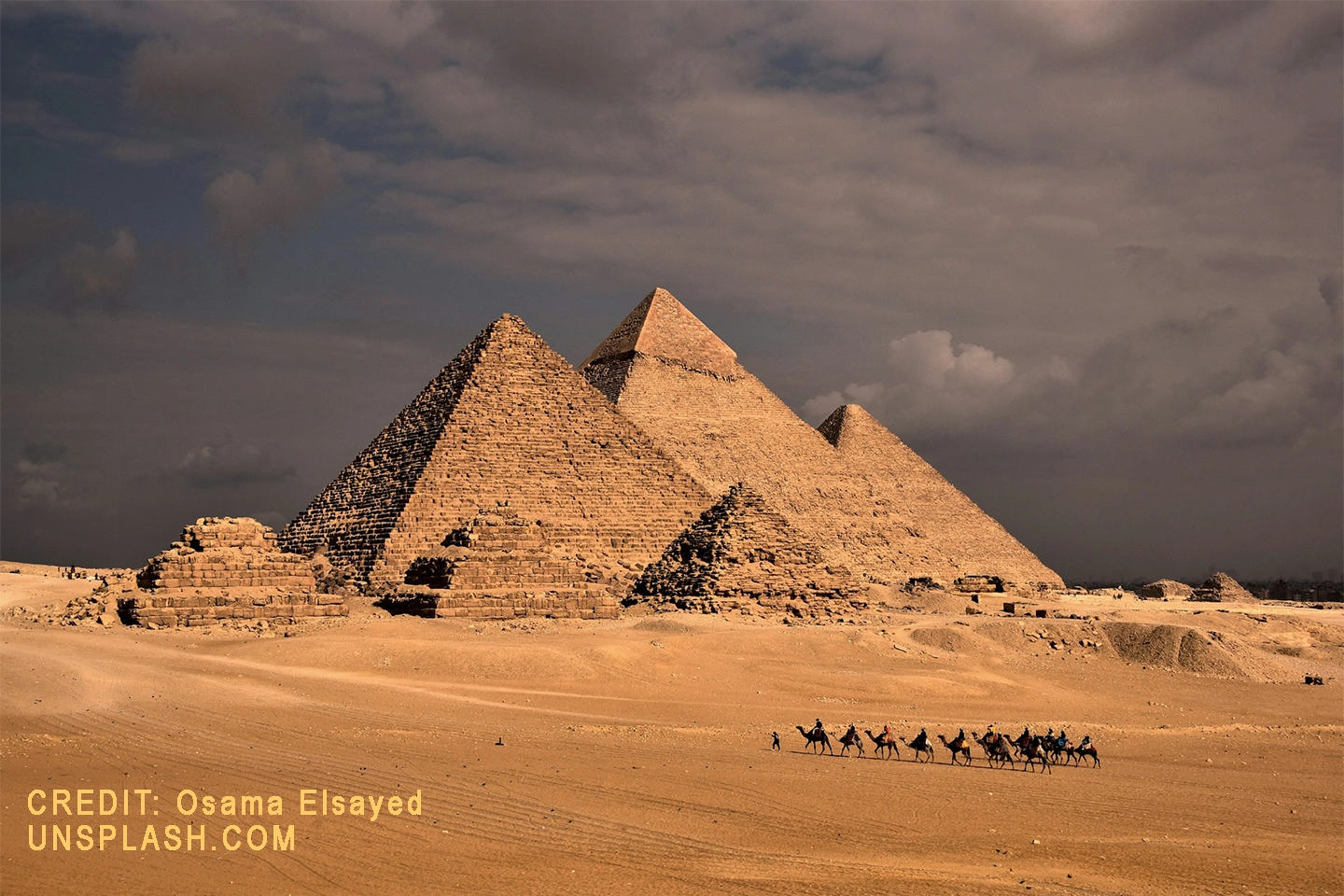
1933: Cairo, Egypt
Doctor Damien Plodington swished the tea around his mouth before swallowing and returned the damp towel to his forehead. The locale was undeniably oppressive, but despite the inhumane conditions, people adapted to life in the desert, and some even prospered. Plodington was not one of them. As his misery levels rose as high as the hellish temperatures outside, he sulked, questioning why he ever took such a shine to archaeology. Within the tent, the stale air was barely breathable. Tent air had one flavor: tongue depressors, worn shoe leather, and necktie sweat. Tea was the English cure-all, and it did wonders to lift his spirits. Or maybe it was the whiskey he used to give it a good kick. It didn’t matter now. He heard Omar approaching, so he raised the cup to his lips and drained what was left.
Omar was both their most dependable worker and most irritating employee. Once started, that yapper of his never switched off. Plodington squeezed his eyes shut against the approaching commotion. Give me strength. He heard other voices mixing with Omar’s, which meant he had attracted attention, and others had gravitated to him. This also signaled to Plodington that fewer people were working on their dig site.
Plodington usually found himself enraged when workers were distracted and drawn away from their dig site. The site did not technically belong to him, nor did it belong to his lifelong chum, Doctor James Monroe. The project was jointly owned by the Archaeology Department at Cambridge University and the Egyptian government; Monroe and Plodington simply managed it. The two men were leaders in their field. They had already located a considerable number of artifacts, though nothing substantial enough—yet—to bring fame or the creature comforts of fortune. They were due. It was just a matter of time before they discovered that big find.
Some years ago, Plodington and Monroe had met a man named Howard Carter, a fellow archaeologist who was infinitely less qualified than they were. Archaeology required a certain amount of dumb luck in the field, but intellect and tenacity would position you on sites where a significant discovery was possible. While Carter was still soggy behind the ears in terms of craft, he was eager, charming, and savvy. And he had a gift that took him places: Carter could talk the tail off the devil. His charm had captured the attention of a man named Lord Carnarvon, who wished to finance his expedition.
Two years later, at a dinner party, Carter, Monroe, and Plodington stole away to discuss their fieldwork over snifters of brandy and cigars. Carter admitted His Lordship had itches in his britches—he had grown impatient with the lack of progress and issued an ultimatum. Carter had one final season. Should he fail to find anything, his future would be in great doubt. Unless he earned a title or earned the respect of his peers, as Plodington and Monroe did, Carter had little chance of success.
The two friends consoled Carter. The field of archaeology barely garnered enough attention to stay relevant. Unless Carter could regain his fortuitous ways of staying afloat, his future in archaeology would be doomed.
After that night, Plodington and Monroe forgot all about Carter, until his name popped up in the news more than a year later. Carter had not just grabbed the attention of archaeologists, but had quickly gained worldwide recognition. In November 1922, he had located the internment site of a boy who had ascended to power in 1333 B.C. The boy was the son of Akhenaten, more commonly known as Amenhotep IV, and, at nearly ten, had risen to become pharaoh. The boy pharaoh ruled for ten years until his death at about twenty, when his body was interred in the Valley of the Kings along the Nile River. Carter had discovered the final resting place of this boy pharaoh, whose name was Tutankhamun.
Thanks to Carter’s discovery, archaeology suddenly prospered. Colleges and universities saw the need to employ more qualified faculty to teach the rising number of students eager to be the next Howard Carter. Before long, more projects and financial backers than qualified archaeologists emerged.
Years slipped by like desert sand through their calloused, blistered fingers before Plodington and Monroe received a special invitation to attend a soiree honoring Howard Carter, whose fame and fortune suited him reasonably well. The three men laughed over old stories, enjoying snifters of brandy and fine cigars once again. Plodington and Monroe also thanked Carter. If he had not discovered Tut’s tomb a decade earlier, they might have found themselves as unemployed as Carter nearly had become. After shaking hands, they wished one another well. Before the carriage took away Carter, he leaned out the window and made them promise not to let time sneak away again. They all agreed: ten years was entirely too long.
Little did Plodington and Monroe realize that this would be the last time they would see their friend.
Omar was a high-strung fellow. As his excitement grew, so did the rapidity of his speech. When he was keyed up, it was impossible to understand him, whether he spoke Arabic or English. Plodington slumped into a pillowed chair and dropped the damp towel onto his face with a splat. Sometimes Omar could drive him to drink, but the prospect of working with Omar while struggling with a hangover was too much to bear. Omar opened the tent flap and entered, still yapping away. Plodington put a finger to his lips to quiet him, but the man, in rare form today, kept up his nonsensical chatter inside the tent. Rolling his eyes inwardly, Plodington snatched the wet cloth from his face, sat up, and threw it at Omar. It hit Omar with a wet smack squarely in the nose, instantly squelching the jabbering. Plodington fell back onto the cushion. Omar opened his mouth to speak, but Plodington stifled him with a finger in the air. James Monroe saw all this as he entered the tent.
“You must teach me that trick,” a shirtless Monroe said, genuinely impressed. He sauntered over to an empty bowl and poured fresh water into it. He dunked a clean cloth into the water bowl and washed the sand and dirt from his leathery skin. Like Plodington’s, Monroe’s body was sculpted by grit and determination. Years and years of it. Each carried bulbous shoulders, a broad chest, firm abdominal muscles, brawny arms, and heavy hands.
Monroe walked to his side of the tent and pulled on a fresh shirt. Omar looked to Plodington, opened his mouth to speak, and was silenced once more by the finger.
Monroe moved to stand next to Omar in awe. “Duke,” he said, using his friend’s childhood name, “I am bloody serious. You must teach me how you do that. I haven’t been able to quiet that man for the past two hours. I even pulled out my gun.”
Plodington’s eyes widened. “You threatened to kill Omar?”
“What?” Monroe said. “No, I was going to off myself because I couldn’t take it anymore.”
Plodington chuckled and shook his head. Omar grimaced. “See what I’ve been telling you, Omar?” Plodington asked. “That mouth of yours is deadly. Have you considered our proposal to stitch it shut? Now, what was that all about?”
Omar wanted to speak but was thwarted a third time when Plodington’s finger stabbed the air. Monroe walked past Omar and mouthed, “wow.”
“So what about the commotion?” Plodington asked a second time.
Monroe leaned in close to Plodington, suddenly looking like he was about to burst from pent-up elation. “Damien, you’re coming with us. I found something. Something significant.”
Outside the tent, Plodington hesitated at the sight of a dozen workers on camels and on foot. Beyond them, another dozen camels carried supplies. Monroe had assembled a caravan.
“Where?” Plodington asked, excusing the fact that their dig site was understaffed. A caravan meant serious business, given they already had a site.
Monroe responded, “Close.”
“Where?” Plodington repeated.
“The outskirts,” Monroe answered. Plodington knew Monroe liked to travel along the desert's rim. Monroe explained he had found a trail that forked toward the desert, one he didn't recognize. “I followed it until it stopped at a sand dune. I climbed up the dune.”
“And?”
Omar interrupted. “We could not see him any longer. I grew worried after much time had passed. I was about to search for him when he jumped over the edge of the dune and slid down its side, screaming and hollering. That was why I was excited during our ride back.”
Plodington looked from Omar to Monroe. He knew they were waiting for him to ask the obvious question. He played along. Sighing, he finally asked, “What did you find?”
“A pyramid,” the two answered together.
Plodington gawked at them, completely taken by surprise.
Omar added, “It is true. Well, I suppose it is true. I did not see it personally.”
“Oh, it’s out there all right,” Monroe said.
Plodington furrowed his eyebrows at Omar. Skepticism crept into his next question. “How is it you could not see a pyramid?”
“I am no expert like you or Doctor Monroe,” Omar said. “He shouted that he saw an upside-down pyramid. All I could see were dunes of sand. I wondered if the heat had made him sick.”
Plodington shot Monroe a quizzical look.
Monroe crossed his heart with his fingers.
Omar added, “I have been in the service of you and Doctor Monroe for many years. I have no greater respect than that which I have for the two doctors. I hope I have earned your trust as you have earned my trust. I have done nothing but speak the truth to you, and I am sure Doctor Monroe has spoken true. Sometimes you have to have faith. You shall see soon enough, Doctor Plodington. You shall see with your own eyes, and then you will know.”
Plodington sighed and got on his camel. The caravan plodded out of Cairo toward the Sahara Desert. It was impossible to conceal a caravan, even when you wanted an expedition to go unnoticed. The trek took a few hours, as they did their best to stay away from prying eyes.
They traveled the trail along the outskirts frequented by Monroe until they reached the fork heading toward the desert.
“Unusual,” Plodington said. “Why would a trail leading into the desert be well traveled?”
Monroe shrugged.
A short while later, the trail abruptly ended, and they found themselves surrounded by sand dunes twenty meters tall.
Monroe led Plodington to the edge of the dune he had climbed earlier that day. Plodington tugged at his arm before he started his climb.
“Do you not find it strange that this trail is packed flat from heavy use but ends in the desert? That’s not normal.”
“No,” Monroe said, leaping onto the dune and beginning his ascent. “It’s not.”
Plodington sighed heavily. “Omar, grab our gear.”
Omar did as instructed. After donning gloves, Plodington and Omar climbed up the tall dune. Monroe waited for them at the summit, despite the shimmering heat. Omar reached the top ahead of Plodington. Monroe and Omar danced around, squealing in excitement. Plodington paused before pulling himself up. Omar’s chatter was indecipherable, which was not entirely unexpected. The unexpected part was that Monroe sounded like Omar.
Plodington placed his hands into the sand at the top, except there was hardly any sand there. He glanced up at Omar and Monroe, who stopped dancing to watch Plodington’s reaction. Disbelief shifted into surprise. He was already swiping at the sand, revealing more solid stone.
He peered up at Monroe and Omar, unable to speak.
“I think we'd better help the man up. What do you think, Omar?” They lifted Plodington onto the top of the dune that was not a dune. “Amazing, isn’t it, ol’ chum?”
“How…”
“How indeed,” Monroe beamed. “Yes, my dear friend, there are more questions than answers. What is lost in time is found in time.” Omar gathered supplies from Plodington while Plodington dusted the sand off his clothes.
Monroe handed him a canteen. Plodington took a long drink, then handed it back. “Come. You must see this.”
They walked along the only flat surface visible as far as the eye could see, stopping at the edge on the opposite side.
“Who could have built this?” Plodington asked. “It makes no sense. What was its purpose? And why build it out here?” He searched the surrounding desert and scrunched his face. “It appears this is the only structure. If it is upside down, as you suggested, how could it even stand?”
In response, Monroe hopped over the side. Plodington watched as Monroe went to work with a shovel. A gap appeared between the topmost stone and the sand underneath. Monroe disappeared under the stone. A moment later, he popped his head out. “Are you coming?”
Plodington jumped down into the sand.
“The stone alignment,” Monroe said, “has a pyramidal structure, except that it appears to be pointing downward. Notice those layers,” he said, pointing under the stone ceiling.
“It makes no sense.”
“No, it doesn’t. And do you know what else makes no sense?” Plodington shrugged. “Come to the dune over here and touch the sand without your gloves.”
Plodington pulled off his right glove and touched the sand. He expected to burn his hand, and did, jerking his hand back. “It’s hot.”
Monroe laughed. “Well, yeah, it’s the bloody desert. Now touch the sand next to the pyramid.” Plodington rolled his eyes. “Come on, trust me.”
Plodington tapped the sand next to the pyramid, expecting another prank. His expression softened, and he plunged his hand into the sand. “What the hell?”
Monroe crossed his arms. “Touch the stone.”
Plodington placed his hand against the stone. Then, with arms outstretched, he leaned the front side of his body against the stone. Cheek to stone, he closed his eyes.
“It makes no logical sense, Damien. Sand and stone baking in the desert sun should be, what, sixty to eighty degrees centigrade. Yet they are cool to the touch.”
“Shush. I am busy studying this rock.”
Monroe giggled. “Yeah? Wait until you see the inside of this thing.”
That garnered Plodington’s attention. He turned his head. “Inside?”
“Of course, ya dolt. I crawled inside when you were topside.”
“This is not normal.”
A few seconds later, they both laughed.
“Always the adventurous one,” Plodington said.
Monroe responded, “Always the earnest one.”
They continued to laugh. Monroe slapped a hand on his partner’s shoulder. “Fear not, my friend. I believe this discovery is far greater than anything discovered before.”
“King Tut who?”
“Indeed,” Monroe said with enthusiasm. “With the university’s backing, King Tut will be nothing more than a dusty legend compared to our find. But to get there, we have work to do. Now, we must do what all great archaeologists do.”
“Call the help over and make them do all the dirty work?”
“Yes, indeed. But first we need to engage in a little ol’-fashioned breaking and trespassing.”